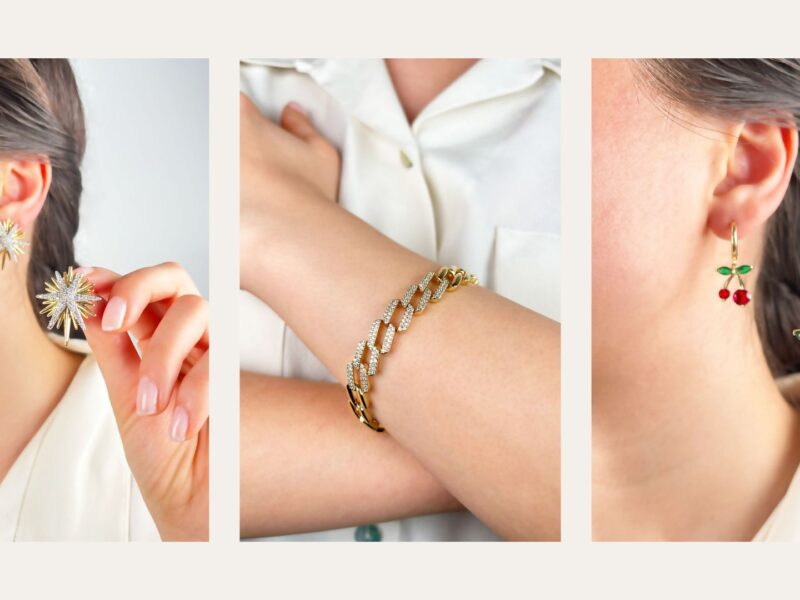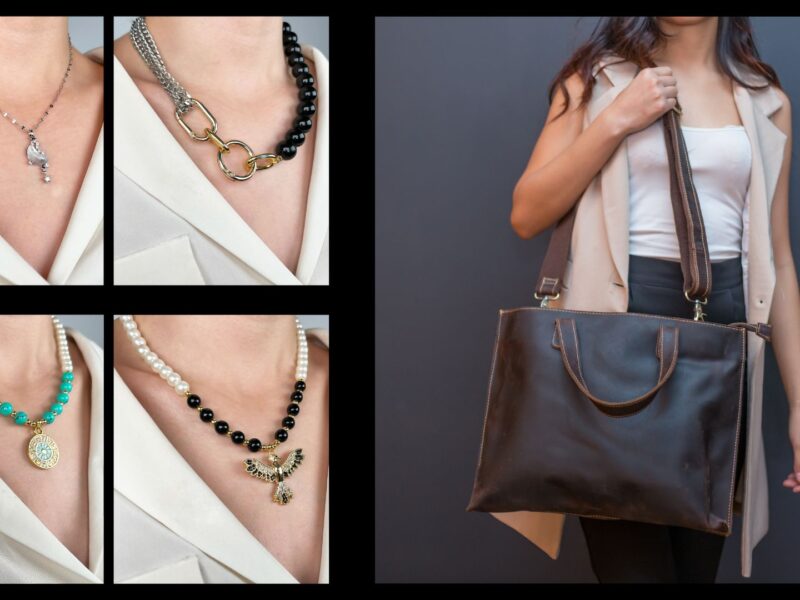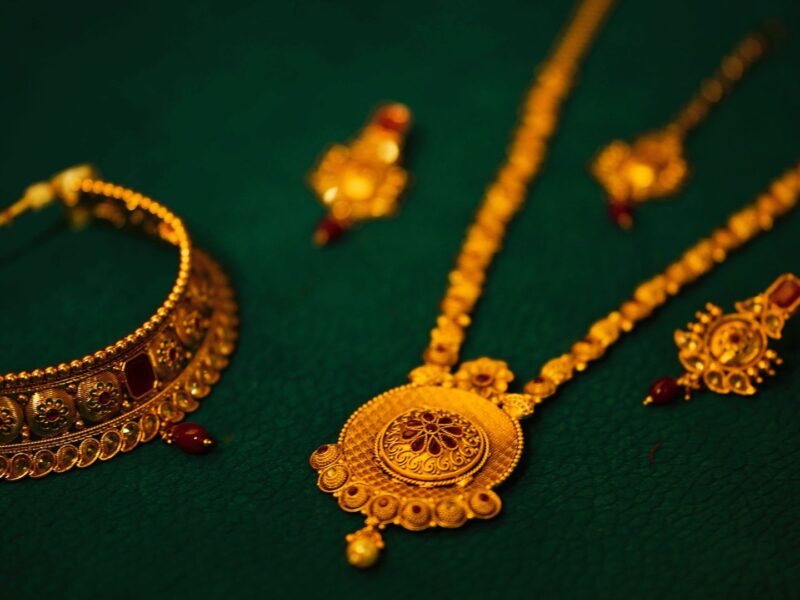
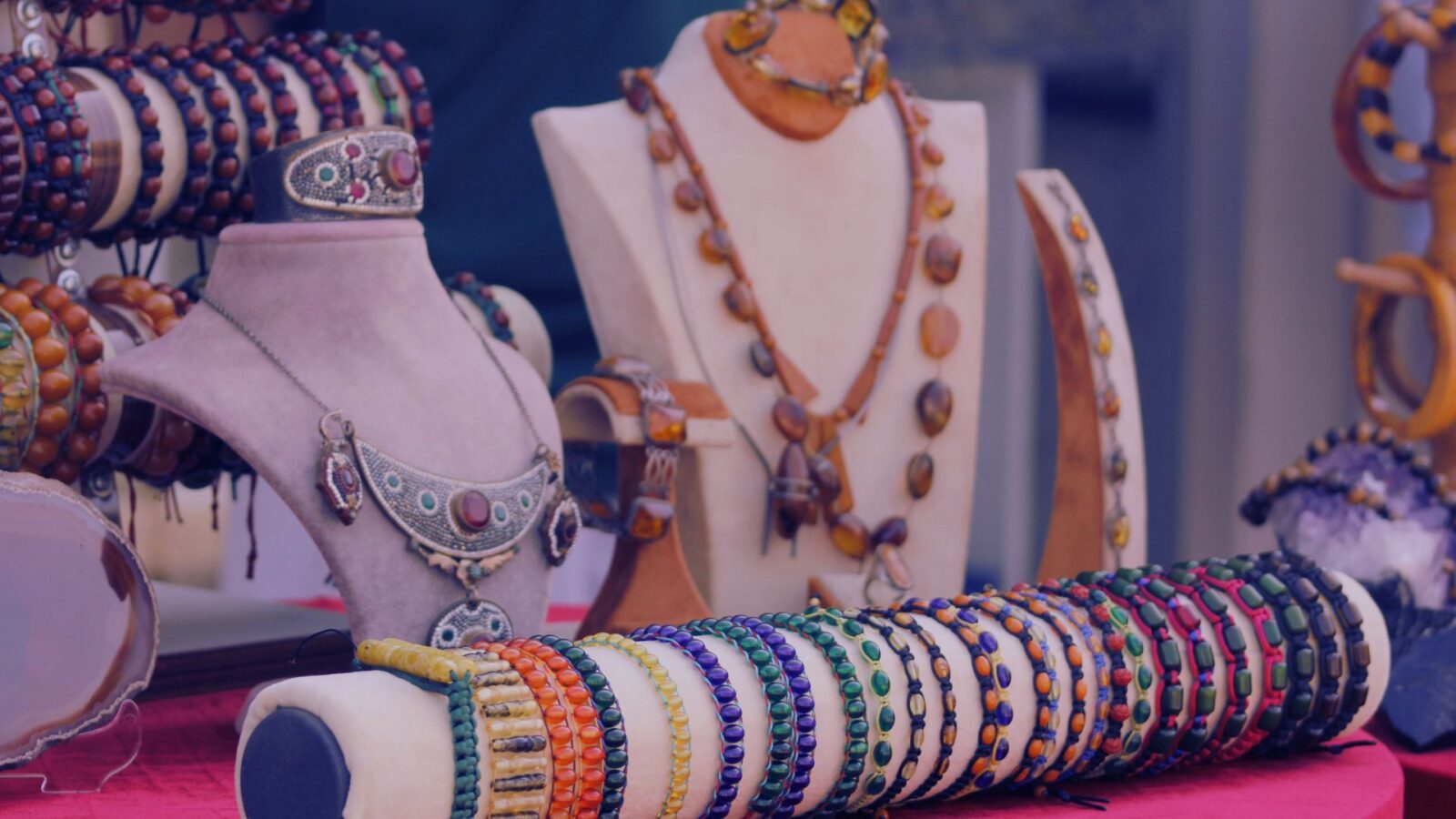
Choosing the right jewelry for your outfit is not only about the style of the piece. Color plays an equally important role in how jewelry and clothing work together. The right combination can create harmony, introduce contrast, highlight a particular color, or completely change the mood of an outfit.
But how do you match jewelry with outfit colors? Should gold or silver jewelry be worn with certain shades? What jewelry works with black, white, beige, red, blue, or green clothing? And how can colorful jewelry be introduced without making an outfit feel too busy?
This guide explores practical ways to coordinate jewelry and clothing colors using monochromatic combinations, complementary and analogous colors, neutral metals, and intentional pops of color.
1. Why Does Color Matter When Styling Jewelry?
Jewelry occupies relatively little space compared with clothing, but its position near the face, neckline, hands, and wrists gives it strong visual influence.
A necklace can introduce contrast to a plain dress, earrings can brighten the area around the face, and a colorful bracelet can become the focal point of an otherwise neutral outfit.
Rather than trying to find one universally “correct” jewelry color, think about the effect you want to create.
2. The Three Main Ways to Match Jewelry with Clothing Colors
Most jewelry-and-color combinations can be approached in three broad ways:
- Harmony: Choose colors that are similar or closely related.
- Contrast: Use jewelry that stands apart from the clothing color.
- Neutral balance: Use gold-, silver-, pearl-, or other relatively neutral jewelry tones to support the outfit.
None of these approaches is inherently better. The right choice depends on your outfit and personal style.
“Jewelry does not need to match the color of your clothes. Sometimes the most effective combination comes from deliberate contrast.”
— SOSE Style Notes
3. How to Use the Color Wheel for Jewelry Styling
A basic color wheel can be useful when combining colorful jewelry with clothing.
Colors positioned near one another generally create softer transitions, while colors positioned farther apart can create stronger contrast.
You do not need to follow color theory rigidly. Use it as a starting point for understanding why certain combinations feel calm and coordinated while others appear energetic and expressive.
4. What Is Monochromatic Jewelry Styling?
Monochromatic styling uses different shades, tones, or intensities within the same general color family.
For example, a blue outfit can be combined with jewelry containing blue or blue-grey details.
The colors do not need to match exactly. Slight variation often creates more depth than using one identical shade throughout the outfit.
5. How to Make Monochromatic Jewelry More Interesting
When the colors are similar, use texture to create contrast.
Combine smooth clothing with textured jewelry, polished metal with matte fabrics, or colorful stones with a simple monochromatic dress.
This prevents the outfit from appearing too flat while maintaining a cohesive color palette.
6. What Are Complementary Colors?
Complementary colors sit opposite each other on a traditional color wheel and create noticeable contrast when placed together.
Common examples include:
- Blue and orange
- Red and green
- Yellow and violet
You do not need to use these combinations at full intensity. A muted green outfit with a small reddish jewelry accent can create a much softer interpretation of the same principle.
7. How to Wear Complementary Colors Without Overdoing It
If the clothing already has a strong color, use the contrasting shade as a smaller accent.
A colorful Natural Stone Necklace, ring, bracelet, or pair of earrings can provide enough contrast without requiring multiple colorful accessories.
Keeping the bag and shoes relatively neutral can help the jewelry remain intentional.
8. What Are Analogous Colors?
Analogous colors are positioned next to one another on a color wheel.
Examples include blue with blue-green, green with yellow-green, or red with red-orange.
Because these colors are closely related, they generally produce a softer and more harmonious effect than complementary combinations.
9. How to Style Analogous Colors with Jewelry
Start with the dominant clothing color and choose jewelry containing a nearby shade.
For example, a blue outfit could incorporate turquoise or blue-green details, while warm red clothing could be combined with orange or warm-toned accents.
This technique is particularly useful when you want to introduce color without creating a dramatic contrast.
10. Neutral Jewelry as an Easy Styling Foundation
Metallic and other relatively neutral jewelry tones are useful because they can work across many different clothing colors.
Gold-tone, silver-tone, pearl, black, and white details can all act as visual anchors within a colorful outfit.
The choice does not need to follow a rigid rule based solely on the clothing color.
11. Gold-Tone Jewelry: What Colors Work Well?
Gold-tone jewelry can introduce warmth and contrast to many outfits.
It can work particularly well with:
- Black
- White
- Beige and cream
- Brown
- Olive and green
- Navy
- Red and burgundy
- Warm earth tones
These are styling ideas rather than restrictions. Gold-tone jewelry can also be used with cooler colors when you want stronger contrast.
12. Silver-Tone Jewelry: What Colors Work Well?
Silver-tone jewelry can create a clean, crisp metallic accent.
It works easily with colors such as:
- Black
- White
- Grey
- Blue
- Navy
- Pink
- Purple
- Bright colors
A Steel Necklace can provide this type of metallic contrast in contemporary outfits.
13. Do Warm Colors Always Need Gold Jewelry?
No. Warm clothing colors do not automatically require gold-tone jewelry.
A red, orange, camel, or brown outfit can also be combined with silver-tone jewelry if you prefer a cooler contrast.
Think of metal temperature as a styling tool rather than a strict rule.
14. Do Cool Colors Always Need Silver Jewelry?
No. Blue, green, violet, and other cooler colors can work with gold-tone jewelry as well.
Gold against blue, for example, can create a strong and sophisticated contrast.
The best metal tone depends on the complete outfit, including accessories and your desired visual effect.
15. Can You Mix Gold and Silver Jewelry?
Yes. Mixed-metal styling can make an outfit feel more contemporary and less rigid.
Instead of treating gold and silver as incompatible, look for repetition.
If you wear a gold-tone necklace with silver-tone earrings, a mixed-metal ring or bracelet can visually connect the two.
16. How to Make Mixed Metals Look Intentional
One simple method is to choose a dominant metal and use the second as an accent.
Another is to distribute both tones throughout the outfit.
For example:
- Gold-tone necklace
- Silver-tone earrings
- Gold- and silver-tone rings
The repeated tones make the combination appear deliberate rather than accidental.
17. What Jewelry Goes with a Black Outfit?
Black is one of the most flexible backgrounds for jewelry because it creates strong contrast with metallic and colorful pieces.
With black clothing, you can try:
- Gold-tone jewelry for warmth
- Silver-tone jewelry for a cooler, graphic look
- Pearls for strong light-dark contrast
- Colorful natural stones for a focal point
- Statement jewelry for evening styling
Because black itself is visually restrained, it gives you significant freedom to experiment.
18. Black Outfit with Gold-Tone Jewelry
Gold-tone jewelry creates a warm contrast against black.
A chain necklace, earrings, and one or two rings can add definition without requiring additional colors.
For a stronger evening look, increase the scale of one jewelry piece rather than making every accessory equally bold.
19. Black Outfit with Silver-Tone Jewelry
Silver-tone jewelry against black can create a sharper, cooler aesthetic.
This works particularly well with contemporary, minimal, or monochromatic outfits.
Try a simple chain, geometric earrings, or streamlined bracelet.
20. Black Outfit with Colorful Jewelry
Black also provides an effective background for colorful jewelry.
A natural stone necklace or colorful earrings can become the main focal point without competing with the clothing.
Keep other accessories relatively simple if you want the jewelry color to remain dominant.
21. What Jewelry Goes with a White Outfit?
White creates a clean background that works with both subtle and expressive jewelry.
Gold-tone jewelry can introduce warmth, silver-tone pieces can maintain a crisp palette, and colorful stones can create stronger contrast.
A Chain Necklace can add texture to a simple white shirt or dress.
22. White Outfit with Gold-Tone Jewelry
Gold and white create a warm, polished combination.
This pairing can work with summer dresses, white shirts, tailoring, and evening outfits.
Natural textures such as linen can make the contrast feel more relaxed.
23. White Outfit with Silver-Tone Jewelry
Silver-tone jewelry maintains the cooler, cleaner character of white clothing.
Try this combination when you want a minimal or contemporary look.
Black accessories can introduce additional contrast if needed.
24. White Outfit with Colorful Jewelry
White is also an excellent background for saturated colors.
Colorful earrings, a stone necklace, or a bright bracelet can become the central accent.
This is an easy way to introduce color without changing the clothing palette.
25. What Jewelry Goes with Beige or Cream?
Beige and cream provide softer neutral backgrounds than black or white.
They can work with:
- Gold-tone jewelry
- Silver-tone jewelry
- Pearls
- Brown and earthy colors
- Colorful natural stones
Because the clothing is relatively quiet, jewelry can determine whether the outfit feels warm, cool, minimal, or expressive.
26. Beige Outfit with Gold-Tone Jewelry
Gold-tone jewelry reinforces the warmth of beige and cream clothing.
This combination can create a tonal, understated look when paired with brown, camel, or neutral accessories.
Use different textures to keep the palette from feeling too uniform.
27. Beige Outfit with Colorful Jewelry
Beige provides an easy background for a pop of color.
A colorful bracelet, stone necklace, or earrings can become the visual focal point.
A neutral Shoulder Bag can maintain balance.
28. What Jewelry Goes with a Red Outfit?
Red already has strong visual presence, so jewelry can either support it or introduce deliberate contrast.
Gold-tone jewelry can create warmth, while silver-tone jewelry provides a cooler counterpoint.
For colorful jewelry, consider whether you want a tonal combination or a contrasting accent rather than automatically adding another strong color.
29. Red Outfit with Gold-Tone Jewelry
Gold-tone jewelry can reinforce the warmth and richness of red clothing.
A simple necklace and earrings may be enough when the dress or top already has significant visual impact.
For evening, one stronger jewelry piece can create a more dramatic effect.
30. Red Outfit with Silver-Tone Jewelry
Silver-tone jewelry creates a cooler contrast against red.
This can make the outfit feel sharper and more contemporary.
Try streamlined jewelry rather than highly decorative pieces if the red clothing is already the focal point.
31. What Jewelry Goes with a Blue Outfit?
Blue works with a wide range of jewelry colors and metals.
Silver-tone jewelry can continue a cooler palette, while gold-tone jewelry introduces warmer contrast.
Blue-green, turquoise, violet, and other neighboring shades can create more tonal combinations.
32. Navy Outfit with Jewelry
Navy provides a versatile alternative to black.
Gold-tone jewelry creates noticeable warmth against navy, while silver-tone pieces can produce a cooler, more understated effect.
Pearls can also create a refined contrast against dark blue clothing.
33. Light Blue Outfit with Jewelry
Light blue can be paired with silver-tone jewelry for a soft, cool palette or gold-tone jewelry for greater contrast.
White and pearl details can keep the combination light.
If you want more color, use a small contrasting accent rather than several competing shades.
34. What Jewelry Goes with a Green Outfit?
Green can move from muted olive to vivid emerald-like tones, so the ideal jewelry depends on the specific shade.
Gold-tone jewelry can create warmth, silver-tone pieces can provide cooler contrast, and natural stone jewelry can introduce related or contrasting colors.
Neutral bags can help simplify an outfit when both clothing and jewelry contain strong color.
35. Olive Green with Jewelry
Olive works naturally with warm metallic tones, brown, beige, cream, and other earthy colors.
However, silver-tone jewelry can also provide an effective cooler contrast.
Choose according to whether you want the outfit to feel tonal or more graphic.
36. Bright Green with Jewelry
With vivid green clothing, consider keeping the jewelry relatively simple if you want the color of the outfit to dominate.
Gold- or silver-tone jewelry can provide definition without introducing another saturated shade.
Alternatively, a small contrasting color accent can create a more expressive look.
37. What Jewelry Goes with Pink?
Pink can work with both warm and cool jewelry tones.
Soft pink with silver-tone jewelry creates a light, cool combination, while gold-tone pieces introduce warmth.
For stronger pinks, neutral metallic jewelry can allow the clothing color to remain dominant.
38. What Jewelry Goes with Purple?
Purple can be styled tonally with violet-related colors or contrasted with warmer metallic accents.
Gold-tone jewelry can create a strong contrast, while silver-tone pieces can maintain a cooler effect.
With deep purple clothing, lighter jewelry details can help create visual separation.
39. What Jewelry Goes with Brown?
Brown works naturally with cream, beige, gold-tone metals, earthy colors, and many natural stone palettes.
Silver-tone jewelry can also be used when you want a more unexpected contrast.
A brown outfit with a colorful stone necklace can create a particularly rich combination of texture and color.
40. What Jewelry Goes with Grey?
Grey provides a versatile neutral background.
Silver-tone jewelry creates a monochromatic direction, while gold-tone pieces introduce warmth.
Brightly colored jewelry can also stand out clearly against grey clothing.
41. What Jewelry Goes with Pastel Colors?
Pastels generally create a softer palette, so you can either maintain that softness or introduce contrast.
Delicate metallic jewelry, pearls, and lighter stone colors can create a harmonious effect.
For a more contemporary result, try a stronger chain or contrasting metal tone.
42. What Jewelry Goes with Bright Colors?
When clothing is already highly saturated, neutral metallic jewelry can provide visual stability.
Gold-tone and silver-tone pieces allow the color of the outfit to remain the focus.
If you want a more expressive look, introduce one additional color through earrings, a ring, or a bracelet rather than several competing accents.
43. What Jewelry Goes with a Multicolored Outfit?
With prints or multicolored clothing, choose one existing color and repeat it subtly through jewelry.
Another option is to use simple metallic jewelry that does not introduce another major color.
Avoid feeling that every color in the print needs a matching accessory.
44. How to Use Jewelry as a Pop of Color
A neutral outfit is an ideal background for colorful jewelry.
Black, white, beige, cream, grey, and denim can all allow a colorful necklace, bracelet, ring, or pair of earrings to become the focal point.
This technique can transform familiar wardrobe basics without requiring a completely different outfit.
45. Natural Stone Jewelry for Adding Color
Natural stone jewelry can introduce multiple colors and natural variations into an outfit.
Rather than matching every stone to the clothing, choose one dominant or complementary shade to create a visual connection.
Explore Natural Stone Necklaces and Natural Stone Bracelets for different approaches to color and texture.
46. Pearls as a Neutral Jewelry Element
Pearls can function as a relatively neutral element in many outfits.
A Pearl Necklace can create contrast against black or navy while blending softly with white, cream, beige, and pastel clothing.
The surrounding metal, pearl color, and overall necklace design will influence the final effect.
47. How to Match Earrings with Outfit Colors
Because earrings sit close to the face, their color can have a noticeable effect on the overall look.
With brightly colored clothing, simple metallic Earrings can provide balance.
With neutral clothing, colorful earrings can become a stronger focal point.
48. How to Match Bracelets with Outfit Colors
Bracelets provide a useful place to introduce color more subtly.
A colorful Bracelet can add contrast to a neutral outfit without dominating the area around the face.
You can also layer a colorful bracelet with a simple metallic design to connect different elements of the outfit.
49. How to Match Rings with Outfit Colors
A Ring can repeat the metal tone used elsewhere or introduce a small contrasting color.
Because rings occupy less visual space than necklaces or large earrings, they can be useful for experimenting with color combinations.
Mixed-metal rings can also help connect gold- and silver-tone jewelry within the same outfit.
50. Should Your Bag Match Your Jewelry?
Your bag and jewelry do not need to match exactly.
Instead, look for subtle relationships through hardware, color temperature, texture, or overall style.
For example, a neutral Crossbody Bag can support colorful jewelry, while a bright bag may work better with simpler metallic pieces.
51. Matching Jewelry with Bag Hardware
Bag hardware can provide an easy reference point for jewelry.
Gold-tone hardware can be repeated in a necklace or bracelet, while silver-tone hardware can be echoed through earrings or rings.
This is optional rather than a strict rule. Mixed metals can work just as effectively when used intentionally.
52. How to Balance a Colorful Bag and Colorful Jewelry
If both the bag and jewelry are colorful, choose a visual hierarchy.
You might make the bag the dominant color and use smaller jewelry accents, or keep the bag relatively restrained while the jewelry becomes the focal point.
A Handbag or shoulder bag does not need to repeat the exact jewelry color to feel connected.
53. Jewelry Color Ideas for Office Outfits
For office styling, neutral metals and controlled color accents are easy starting points.
Try:
- Navy + gold- or silver-tone jewelry
- Black + pearls or simple metallic jewelry
- Beige + gold-tone or colorful stone accents
- Grey + silver-tone jewelry or a small pop of color
- White + chain necklace and simple earrings
Adjust the scale and color intensity according to your workplace and personal style.
54. Jewelry Color Ideas for Casual Outfits
Casual clothing provides more room to experiment.
Denim can work with almost any metallic tone, while white shirts and neutral knitwear provide an easy background for colorful jewelry.
Natural stones, mixed metals, and layered pieces can make simple everyday outfits feel more personal.
55. Jewelry Color Ideas for Evening Outfits
For evening, consider stronger contrast.
A black dress can support bold metallic or colorful jewelry, while a red or brightly colored outfit may benefit from a more restrained jewelry palette.
Choose one area — neckline, ears, wrists, or hands — where you want the strongest visual emphasis.
56. Five Easy Jewelry Color Formulas
If you want simple combinations to start with, try these:
- Classic Contrast: Black outfit + gold-tone jewelry.
- Cool Minimal: White or grey outfit + silver-tone jewelry.
- Warm Neutral: Beige or cream + gold-tone jewelry.
- Color Focus: Neutral outfit + colorful natural stone jewelry.
- Mixed Modern: Monochromatic clothing + mixed gold- and silver-tone jewelry.
These are styling formulas rather than fixed rules. Change the metal, color intensity, or jewelry scale according to the look you want to create.
57. Common Jewelry Color Matching Mistakes
Avoiding a few common mistakes can make color styling easier:
- Matching every color exactly: Slight variation can create more depth.
- Following warm/cool rules too rigidly: Contrast can be just as effective as harmony.
- Using too many focal colors: Decide which element should attract attention first.
- Ignoring clothing patterns: Printed outfits may already contain enough visual complexity.
- Forgetting bag hardware: It can help connect different metal tones.
- Avoiding mixed metals automatically: Gold and silver can be combined intentionally.
- Choosing jewelry only by color: Scale, texture, neckline, and occasion matter too.
58. Should Jewelry Match Your Skin Tone or Your Outfit?
You do not have to choose one or the other.
If you have metal tones or colors you particularly enjoy wearing, use them as a foundation and then consider how they interact with the outfit.
Personal preference is more useful than treating skin-tone jewelry rules as absolute restrictions.
59. Build a Versatile Jewelry Color Palette
If you want a jewelry collection that works across many outfits, begin with versatile pieces and then add color strategically.
A practical mix might include:
- A simple gold-tone piece
- A simple silver-tone piece
- A pearl design
- A colorful natural stone piece
- One stronger statement accessory
This provides enough variety to create tonal, contrasting, neutral, and colorful combinations without requiring jewelry for every individual outfit color.
“Color coordination is most effective when it looks intentional, not when every element is perfectly matched.”
— SOSE Style Notes
Find Your Own Jewelry Color Combination
Learning how to match jewelry with outfit colors is less about memorizing strict rules and more about understanding harmony, contrast, and visual balance.
Monochromatic combinations can create a streamlined look, complementary colors can introduce contrast, analogous shades can feel harmonious, and neutral metals can provide an easy foundation. Colorful jewelry can then be used strategically when you want a stronger focal point.
Experiment with gold- and silver-tone jewelry, pearls, natural stones, and different accessory combinations until you discover the palettes that work naturally with your wardrobe.
Explore SOSE Necklaces, Earrings, Bracelets, and Rings to create color combinations that reflect your personal style.