Stainless steel jewelry is valued for its durability, contemporary appearance, and versatility. From simple chains and bracelets to earrings and rings, steel jewelry can be incorporated into both everyday and more polished looks. But regular wear can leave fingerprints, skin oils, perspiration, cosmetics, dust, and other residue on the surface, making jewelry appear less bright over time.
So how do you clean stainless steel jewelry safely? Can you clean it with soap and water? Should stainless steel jewelry be soaked? Is baking soda safe? What about gold-tone steel jewelry, stones, pearls, or plated details?
The answer depends on more than the base metal. A finished jewelry piece may include plating, coatings, stones, pearls, adhesives, enamel, strings, or other components that require different care. This guide explains practical stainless steel jewelry cleaning and care while helping you avoid methods that may be unnecessarily harsh for your jewelry.
1. What Is Stainless Steel Jewelry?
Stainless steel jewelry is made using steel alloys designed to offer good corrosion resistance and durability.
However, “stainless steel jewelry” is a broad category rather than one single material specification. Different alloys, surface treatments, finishes, and plating methods may be used in jewelry production.
The finished piece may also contain components that are not stainless steel.
2. Does Stainless Steel Jewelry Need Cleaning?
Yes. Even when the metal itself remains in good condition, everyday residue can accumulate on the surface.
Common sources include:
- Natural skin oils
- Perspiration
- Hand creams and lotions
- Sunscreen
- Perfume
- Makeup
- Soap residue
- Dust and environmental particles
These substances can create a film on the jewelry that reduces its visible shine.
3. Why Does Stainless Steel Jewelry Look Dull?
A dull appearance does not automatically mean that the steel itself has tarnished or deteriorated.
Fingerprints, oils, cosmetic residue, dried moisture, and everyday dirt can change the way light reflects from the surface.
In other cases, the visible surface may be a coating or plating rather than exposed stainless steel, so changes in appearance should be evaluated according to the complete construction of the piece.
“Before cleaning a piece of jewelry, identify what you are actually cleaning — not only the base metal, but also its finish, stones, plating, and decorative details.”
— SOSE Style Notes
4. What Is the Safest Way to Clean Stainless Steel Jewelry?
For routine care, a clean, soft, dry cloth is a cautious starting point for many stainless steel jewelry pieces.
Gently wiping the surface can help remove fingerprints, light oils, and surface residue without introducing additional cleaning products.
For deeper cleaning, check the product’s specific care instructions before introducing water, soap, brushes, or cleaning solutions.
5. Can You Clean Stainless Steel Jewelry with Water?
Plain stainless steel may tolerate water well, but a piece of jewelry should be evaluated as a complete object rather than only by its base metal.
A necklace, bracelet, ring, or earring may contain:
- Plating or decorative coatings
- Natural stones
- Pearls
- Zircon or other decorative stones
- Enamel
- Adhesives
- Threads, cords, or elastic components
These materials may have different water-care requirements.
For that reason, do not automatically immerse a piece simply because it contains stainless steel.
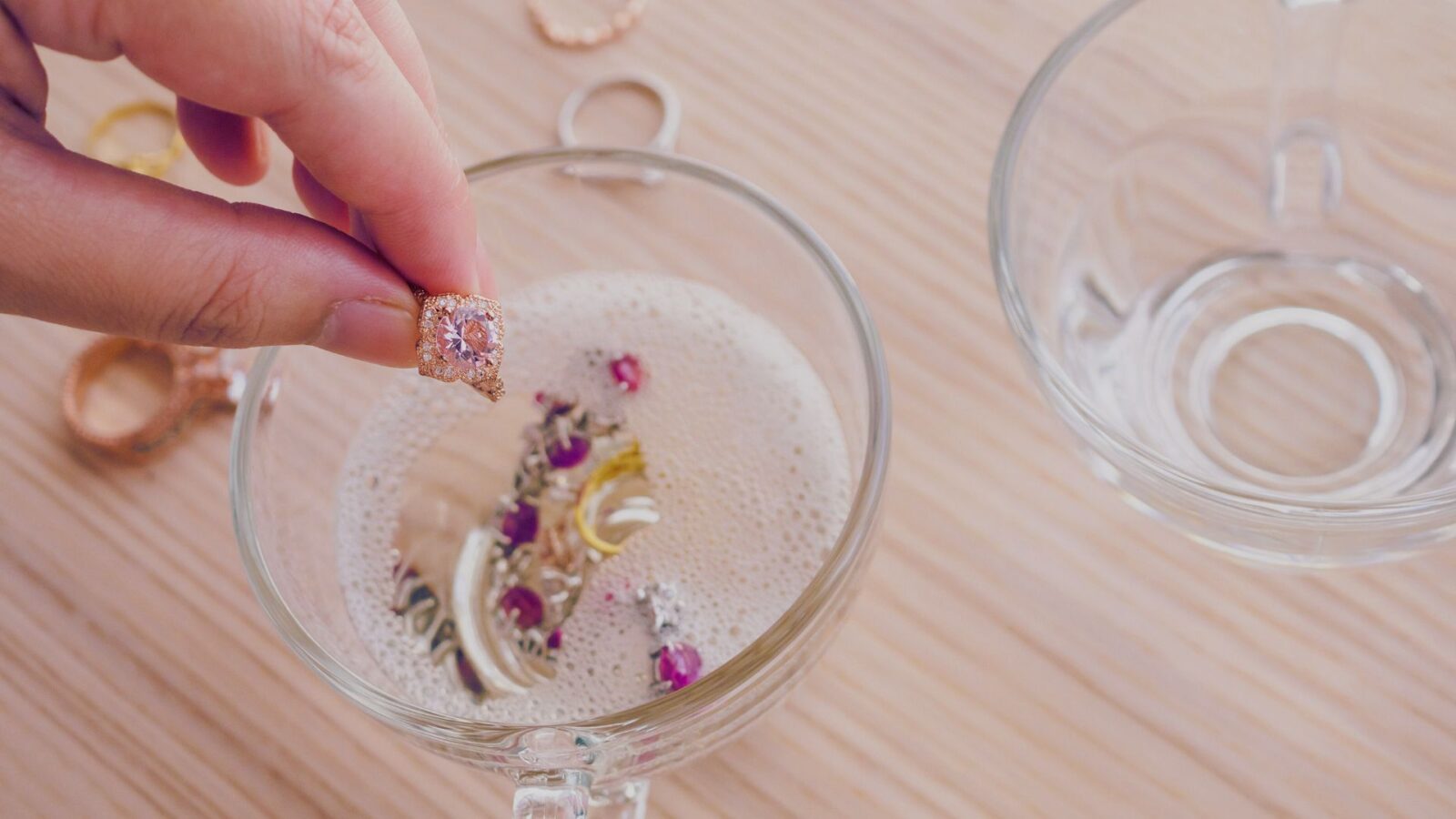
6. Can You Clean Stainless Steel Jewelry with Soap and Water?
A mild soap-and-water method may be appropriate for some plain, uncoated stainless steel pieces, but it should not be treated as a universal cleaning method.
If the product’s care instructions allow water cleaning, use a small amount of mild cleaner and avoid prolonged exposure.
For plated, stone-set, pearl, glued, or otherwise decorated pieces, follow the care requirements for the most sensitive component.
7. Should You Soak Stainless Steel Jewelry?
Routine soaking is not necessary for every stainless steel jewelry piece.
Even if the base metal tolerates water, prolonged immersion may not be suitable for plating, adhesives, stones, pearls, enamel, strings, or other decorative components.
Unless the product instructions specifically support soaking, a more controlled cleaning method is preferable.
8. Can You Use a Toothbrush to Clean Stainless Steel Jewelry?
A toothbrush is frequently recommended in generic jewelry-cleaning advice, but it is not ideal for every piece.
Brush bristles can interact with polished surfaces, delicate coatings, plating, stones, settings, or decorative finishes.
For routine cleaning, start with a soft cloth. If more detailed cleaning is necessary, use a method specifically appropriate for the materials in the piece.
9. Can You Clean Stainless Steel Jewelry with Baking Soda?
Baking soda is another commonly suggested home-cleaning method, but its mildly abrasive nature makes it unsuitable as a universal recommendation for jewelry.
Abrasive pastes can affect polished surfaces and may be especially inappropriate for plated or coated jewelry.
For that reason, avoid using baking soda unless the manufacturer specifically confirms that the method is appropriate for the particular piece.
10. Can You Use Toothpaste on Stainless Steel Jewelry?
Toothpaste should not be treated as a jewelry cleaner.
Many toothpastes contain abrasive ingredients designed for cleaning teeth rather than jewelry surfaces.
Repeated rubbing may affect polished finishes, coatings, or plating.
A product designed for oral care is not automatically appropriate for jewelry care.
11. Can You Use Alcohol to Clean Stainless Steel Jewelry?
Alcohol may interact with coatings, adhesives, stones, decorative finishes, or other components in a finished piece.
Even if bare stainless steel itself tolerates a substance, the entire piece may not.
Avoid using alcohol-based cleaners as a general-purpose jewelry-cleaning method unless the product care instructions specifically allow them.
12. Can You Use Vinegar on Stainless Steel Jewelry?
Vinegar is frequently suggested in home-cleaning recipes, but acidic solutions are not an appropriate universal recommendation for finished jewelry.
They may interact differently with coatings, stones, decorative components, and surface treatments.
Material-specific care is safer than experimenting with household acids.
13. Can You Use Bleach on Stainless Steel Jewelry?
Avoid bleach and strong household chemicals when cleaning jewelry.
Harsh chemicals can interact with metals, finishes, coatings, stones, and other components.
Keep jewelry away from household cleaning products whenever possible.
14. How to Clean a Stainless Steel Necklace
For a Steel Necklace, begin by checking whether the piece is plain steel or includes plating, stones, pearls, pendants, or other materials.
For routine care, gently wipe accessible surfaces with a clean, soft cloth.
Pay attention to areas that frequently touch the skin, such as the back of the necklace and clasp.
If deeper cleaning is required, follow the care instructions for the complete necklace rather than assuming the chain determines the cleaning method.
15. How to Clean a Chain Necklace
A Chain Necklace contains many small links where skin oils and residue can accumulate.
After wearing it, a gentle wipe can help reduce buildup on accessible surfaces.
Avoid aggressively pulling, twisting, or brushing fine chains during cleaning, as mechanical stress can affect links and closures.
16. How to Clean Stainless Steel Bracelets
Bracelets frequently contact the skin, desks, clothing, cosmetics, and other surfaces throughout the day.
Regularly wiping your Bracelet with a soft cloth can help remove surface residue.
For designs containing stones, beads, elastic, or decorative components, make sure the cleaning method is suitable for all materials used.
17. How to Clean Stainless Steel Earrings
Earrings can accumulate skin oils, cosmetics, hair products, and other residue.
Clean decorative surfaces according to their materials and follow appropriate hygiene guidance for the parts that come into direct contact with piercings.
If you have specific concerns about piercing hygiene, irritation, or infection, follow professional medical or piercing-care advice rather than relying on general jewelry-polishing methods.
18. How to Clean Stainless Steel Rings
Rings can be exposed to hand soap, creams, sanitizer, cosmetics, and household products more frequently than many other jewelry categories.
A soft cloth can help remove visible fingerprints and surface oils after wear.
For rings with stones or decorative finishes, avoid aggressive brushing around settings unless the care instructions specifically recommend it.
19. How to Clean Stainless Steel Anklets
An Anklet may come into contact with perspiration, sunscreen, dust, sand, and other environmental residue.
After wearing it, inspect the piece and gently remove visible surface residue according to its material requirements.
If the anklet contains beads, stones, cords, or decorative elements, those materials should guide the cleaning method.
20. How to Clean Gold-Tone Stainless Steel Jewelry
Gold-tone stainless steel jewelry requires additional consideration because the visible surface may include plating or another finish over the steel base.
Avoid assuming that a method safe for bare stainless steel is automatically safe for the gold-tone surface.
For routine care, gentle wiping with a clean, soft cloth is a cautious starting point unless the product instructions recommend another method.
21. Is Gold-Tone Stainless Steel the Same as Gold?
No. A gold-colored piece of stainless steel is not necessarily solid gold.
The appearance may come from plating, coating, or another surface treatment applied to the underlying material.
The specific product description should be used to understand its composition.
22. How to Clean Stainless Steel Jewelry with Stones
When jewelry includes stones, cleaning should take the properties of those stones into account.
Some stones tolerate moisture differently from others. Porous stones, treated stones, delicate materials, and glued settings can require additional caution.
Do not assume that a cleaning method is safe for the stones simply because it is safe for the metal.
23. How to Clean Stainless Steel Jewelry with Natural Stones
Natural stone jewelry requires material-specific care.
Different stones vary in hardness, toughness, porosity, treatment, and sensitivity to water, chemicals, heat, and light.
If your stainless steel piece contains natural stones, follow the care recommendations for the specific stone and construction rather than soaking the entire piece.
You can explore Natural Stone Necklaces while keeping in mind that each stone type may have different care requirements.
24. How to Clean Stainless Steel Jewelry with Pearls
Pearls require more delicate handling than plain stainless steel.
If a steel jewelry piece includes pearls, avoid applying a general metal-cleaning method to the entire piece without considering the pearls.
The most sensitive component should guide the cleaning approach.
25. How to Clean Jewelry with Zircon or Decorative Stones
Stone-set jewelry can contain settings, adhesives, plating, or other details that affect how it should be cleaned.
Do not aggressively brush around stones or soak the piece unless its construction and care instructions allow it.
If a stone appears loose, stop wearing the jewelry until the setting can be inspected.
26. Can Stainless Steel Jewelry Tarnish?
Stainless steel is generally valued for its resistance to corrosion, but “stainless” should not be interpreted as meaning that every finished jewelry piece will remain visually unchanged under every condition.
Different alloys, finishes, plating, coatings, environmental exposure, and other components can affect appearance over time.
Surface residue can also create the appearance of dullness without representing corrosion of the underlying metal.
27. Can Stainless Steel Jewelry Rust?
Stainless steel is designed to resist corrosion better than many ordinary steels, but corrosion resistance is not the same as absolute immunity under every possible condition.
Alloy composition, environmental exposure, chemicals, damage to the surface, and maintenance can influence performance.
For jewelry care, it is more useful to focus on appropriate use and storage than on assuming a piece can never change.
28. Can Stainless Steel Jewelry Get Wet?
The answer depends on the complete piece.
Bare stainless steel and a finished necklace containing steel, plating, stones, adhesive, and decorative details are not necessarily equivalent from a care perspective.
Check the individual product instructions before assuming a piece is suitable for frequent or prolonged water exposure.
29. Can You Shower with Stainless Steel Jewelry?
Shower exposure involves more than water. Jewelry may also come into contact with shampoo, conditioner, body wash, soap, and other cosmetic products.
Because finishes and decorative components vary, removing jewelry before showering can reduce unnecessary exposure unless the specific product is designed for those conditions.
30. Can You Swim with Stainless Steel Jewelry?
Swimming introduces salt water, chlorine, sunscreen, and prolonged moisture depending on the environment.
These factors may affect plating, stones, adhesives, finishes, and other components even when the underlying steel has good corrosion resistance.
Unless the product is specifically intended for swimming, removing jewelry before entering the sea or pool is a cautious approach.
31. Does Sweat Damage Stainless Steel Jewelry?
Perspiration can leave moisture, salts, oils, and other residue on jewelry.
The effect depends on the alloy, finish, plating, and construction of the piece.
After intense exercise or prolonged wear in hot weather, gently removing surface residue according to the care instructions can help maintain the jewelry’s appearance.
32. Should You Remove Jewelry Before Exercise?
Removing jewelry before intense physical activity can reduce exposure to perspiration, friction, impact, and accidental pulling.
It can also help prevent necklaces, bracelets, rings, or earrings from interfering with exercise equipment or movement.
For both jewelry care and practical comfort, storing pieces safely before a workout is often a sensible choice.
33. Perfume and Stainless Steel Jewelry
Perfume contains ingredients that may interact differently with jewelry finishes and decorative components.
A useful habit is to apply perfume before putting on your jewelry and allow it to dry first.
Avoid spraying perfume directly onto necklaces, earrings, bracelets, or other pieces.
34. Lotion, Sunscreen and Stainless Steel Jewelry
Lotions and sunscreen can create a visible film on jewelry surfaces.
Apply skincare products before putting on jewelry and allow them to absorb where practical.
If residue appears, gently clean the piece using a method appropriate for its materials.
35. Hand Sanitizer and Rings
Rings are particularly likely to come into contact with hand sanitizer.
Sanitizer formulas vary and may contain alcohol, fragrance, moisturizers, and other ingredients.
If you regularly use sanitizer, allow your hands to dry before handling or putting jewelry back on where practical.
36. How Often Should You Clean Stainless Steel Jewelry?
There is no universal cleaning schedule that applies to every piece.
Jewelry worn every day may need light surface care more frequently than a necklace worn occasionally.
Instead of cleaning according to a rigid calendar, inspect your jewelry for fingerprints, residue, or visible buildup and clean it when needed using the appropriate method.
37. How to Polish Stainless Steel Jewelry
For routine shine maintenance, gently buffing an appropriate surface with a clean, soft, lint-free cloth may help remove fingerprints and restore visible brightness.
Avoid aggressive polishing, particularly on plated, coated, matte, textured, or stone-set jewelry.
Some finishes are intentionally not mirror-polished and should not be treated as though they are.
38. Can You Use a Jewelry Polishing Cloth?
Polishing cloths are not all the same. Some contain polishing compounds or chemicals intended for particular metals.
Before using one, confirm that it is appropriate for the specific material and finish of your jewelry.
A cloth intended for one type of metal may not be suitable for plated or coated steel jewelry.
39. Can You Use an Ultrasonic Cleaner?
Ultrasonic cleaners should not be considered universally safe for stainless steel jewelry.
Although the base metal may tolerate the process in some circumstances, stones, pearls, adhesives, settings, coatings, or other components may not.
Use ultrasonic cleaning only when the complete piece is confirmed to be suitable for that method.
40. How to Store Stainless Steel Jewelry
Good storage can reduce unnecessary scratches, tangling, and exposure to environmental residue.
Keep jewelry in a clean, dry location and separate pieces where practical.
A soft pouch, jewelry box, or compartmentalized organizer can help prevent chains, rings, earrings, and bracelets from repeatedly rubbing against one another.
41. Should Jewelry Be Stored Separately?
Separating jewelry is particularly useful when pieces have different surfaces, stones, shapes, or hardness levels.
Harder components may scratch softer surfaces when they move against each other in a jewelry box or travel bag.
Necklaces are also less likely to tangle when stored individually.
42. How to Store Stainless Steel Necklaces Without Tangling
Fasten necklace clasps before storage and keep chains separated whenever possible.
Individual compartments, hooks, or suitable jewelry pouches can help prevent several necklaces from becoming intertwined.
Avoid placing heavy pieces directly on top of delicate chains.
43. How to Store Stainless Steel Jewelry While Traveling
Use a travel jewelry organizer or individual compartments rather than placing jewelry loose inside a handbag or suitcase.
Keep pieces away from keys, chargers, cosmetics, and other hard objects that may create scratches or tangles.
Make sure jewelry is clean and dry before storing it for travel.
44. Common Stainless Steel Jewelry Cleaning Mistakes
Avoiding unnecessarily aggressive cleaning can help protect the appearance of your jewelry.
- Using baking soda automatically: Abrasive pastes may affect polished, plated, or coated surfaces.
- Cleaning with toothpaste: Toothpaste is formulated for teeth, not jewelry finishes.
- Scrubbing aggressively with a toothbrush: Brushing may affect delicate surfaces and decorative components.
- Soaking every steel piece: Stones, pearls, adhesives, plating, and other materials may not tolerate immersion.
- Using bleach or strong chemicals: Household cleaners are not universal jewelry-care products.
- Assuming all stainless steel jewelry is identical: Alloys, finishes, plating, and construction can differ.
- Ignoring stones and decorative details: The most sensitive material should influence the cleaning method.
- Polishing too aggressively: Some finishes can be altered by repeated abrasive polishing.
45. A Simple Stainless Steel Jewelry Care Routine
For a straightforward everyday routine, focus on gentle preventive care:
- After wearing: Check for visible fingerprints, perspiration, cosmetics, or residue.
- For routine cleaning: Start with a clean, soft cloth.
- For deeper cleaning: Follow the product-specific instructions for the complete piece.
- Before swimming or showering: Consider removing the jewelry to reduce unnecessary exposure.
- Before using chemicals or cosmetics: Keep jewelry away from direct contact where practical.
- Before storage: Make sure the piece is clean and appropriately dry.
- During storage: Keep pieces separated to reduce scratching and tangling.
This approach prioritizes prevention rather than repeatedly using stronger cleaning methods.
“Good jewelry care is usually less about aggressive cleaning and more about preventing unnecessary buildup, friction, and chemical exposure.”
— SOSE Style Notes
How to Keep Stainless Steel Jewelry Looking Its Best
Cleaning stainless steel jewelry does not need to involve harsh chemicals, abrasive powders, or complicated home remedies. For many pieces, regular gentle care and appropriate storage can help maintain their appearance.
The most important principle is to consider the entire jewelry piece rather than only the steel base. Plating, stones, pearls, adhesives, coatings, and decorative elements can all influence which cleaning methods are appropriate.
When you are unsure, start with the least aggressive option and follow the product’s specific care instructions before introducing water, soap, brushes, polishing compounds, or household cleaning ingredients.
Explore SOSE Steel Jewelry, Steel Necklaces, Bracelets, Earrings, Rings, and Anklets to discover different jewelry styles.